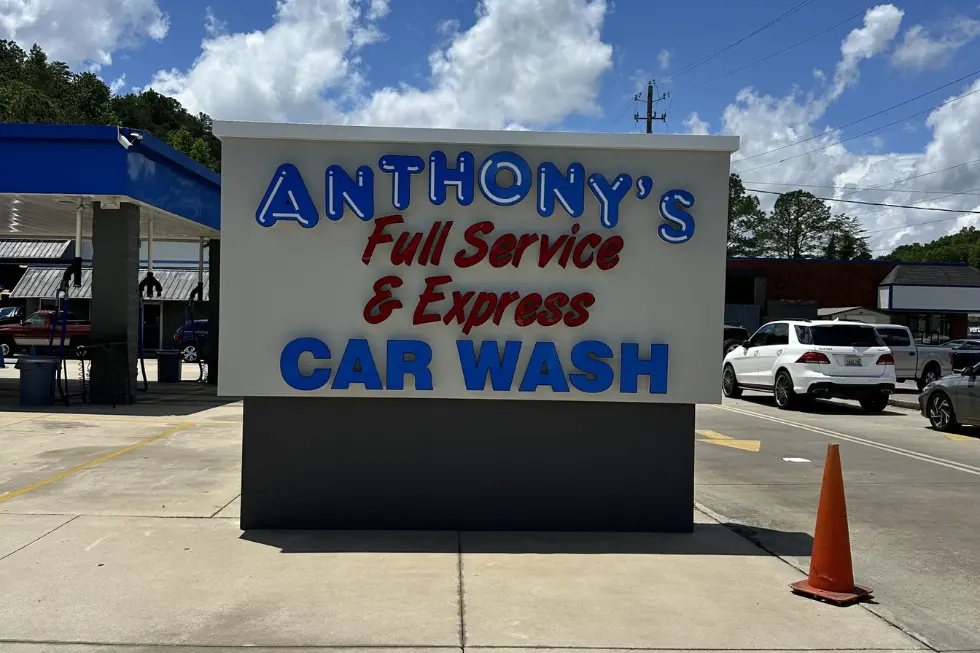
Alabama weather tests every outdoor sign in the state. Summer highs settle into the low to mid 90s, humidity stays heavy from May through September, and severe storms arrive as early as March. Your sign faces all of this without a break. Faded graphics, cracked faces, corroded hardware, and water inside the cabinet are the usual results.
Most sign failures start small. One loose fastener. One cracked gasket. One dim LED module. Ignored long enough, small issues turn into a full replacement and weeks of lost visibility for your business. A few maintenance habits and the right materials will add years to your sign’s service life.
Why Alabama Weather Wears Signs Down So Fast
Heat And UV Exposure
Air temperature tells only part of the story. A dark sign face in direct July sun reaches surface temperatures far above the ambient reading, often 130 degrees or more. Heat expands and contracts sign faces every day, and repeated movement loosens fasteners, opens seams, and cracks acrylic along stress points.
Ultraviolet light does slower damage. UV breaks down pigments in printed vinyl and additives in acrylic panels. Reds and oranges fade first, then yellows. A logo printed with standard inks and no protective laminate will lose color noticeably within two to three years under Alabama sun. Heat also shortens the life of electrical components. LED drivers and power supplies rated for lower ambient temperatures fail early inside a sealed cabinet sitting in full sun.
Humidity, Rain, And Storm Season
Alabama humidity pushes moisture into any opening. Once water enters a cabinet, corrosion starts on wiring connections, transformers, and mounting hardware. Rust streaks running down the face of a sign signal a problem inside the structure, not outside.
Storms add force. Alabama averages dozens of tornadoes each year and sits inside the region forecasters call Dixie Alley, where severe weather peaks in spring and again in late fall. Coastal counties such as Mobile and Baldwin also face tropical systems and sustained hurricane winds. Wind pressure on a large pylon or monument sign is substantial, and poorly anchored structures fail at the base long before the face breaks.
How To Protect Your Business Sign From Alabama Heat And Storms
Specify Materials Built For This Climate
Material choice determines how long your sign survives. Aluminum cabinets resist corrosion far better than steel in humid air. Powder coated finishes hold color longer than painted surfaces. Stainless steel or marine grade fasteners prevent the rust bleed common on standard hardware near the Gulf.
For sign faces, polycarbonate handles hail and flying debris better than standard acrylic. Printed graphics need UV rated inks and a protective overlaminate. Ask your sign company for the warranty term on both the vinyl and the laminate, since a five year outdoor rating and a three year rating produce different results in Alabama sun.
Confirm Wind Load Ratings And Anchoring
Every permanent sign should meet the wind design speed for your county. Coastal Alabama requires higher ratings than inland areas, and local permit offices enforce these standards. Freestanding signs need engineered footings sized for soil conditions and total sign height. Wall signs need anchors rated for the substrate, whether brick, block, or metal stud.
Ask for the engineering documentation when your sign goes up. Insurance adjusters request this paperwork after storm damage, and a properly permitted sign strengthens your claim.
Seal The Cabinet And Let Water Escape
Good sealing keeps rain out. Good drainage handles whatever gets in anyway. Weep holes at the bottom of a cabinet allow condensation and driven rain to exit instead of pooling around wiring. Gaskets around access doors and retainers need inspection each year, since rubber hardens and shrinks under constant heat and UV. Replace cracked gaskets before storm season, not after.
Warning Signs Of Weather Damage To Watch For
Walk your property and study your sign in daylight and again after dark. Chalky or dull surfaces point to UV breakdown in the finish. Hairline cracks near mounting holes indicate thermal stress. Rust streaks, water stains behind the face, or a section of LEDs flickering all point to moisture inside the cabinet.
Listen for buzzing near the electrical housing and watch for a face bowing outward, which signals heat expansion or a failing retainer. Any movement at the base of a pole sign deserves immediate attention from a licensed professional.
How Often Should You Inspect Your Sign?
Schedule a visual check every quarter and a night check monthly, since burned out lighting hurts visibility during the hours when your sign works hardest. Add one detailed inspection in early spring before storm season and one in early fall after the worst heat passes.
Bring in a sign company annually for full service. A technician will torque fasteners, test electrical connections, reseal openings, clean the faces, and document wear before failure occurs. Annual service costs a fraction of an emergency replacement.
Preparing Your Sign Before Severe Weather
Secure or remove anything temporary well ahead of a storm. Banners, A frames, feather flags, and portable message boards become projectiles in high wind. Store them inside.
For permanent signs, verify the access doors are latched and the retainers are tight. Photograph your sign from several angles while intact. Those photos establish condition for an insurance claim later. Confirm your policy covers exterior signage, since some commercial policies list signs separately with a lower coverage limit.
What To Do After A Storm
Inspect from a distance first. Downed wiring near a damaged sign carries serious risk, so keep employees and customers away and call a licensed professional. Shut off power to the sign at the breaker if the cabinet took visible damage.
Photograph everything before cleanup begins. Document cracked faces, bent poles, missing letters, and debris impact. Contact your insurer, then schedule an assessment with a sign company able to provide a written repair estimate. Temporary weatherproofing prevents further water intrusion while permanent work moves through scheduling and permitting.
Repair Or Replace After Damage
Minor issues justify repair. Replacement faces, new LED modules, resealing, and refinishing restore most signs at modest cost. Structural damage changes the math. A bent pole, cracked footing, or compromised cabinet frame often costs more to repair than to replace, and current code requirements apply to any major rework.
Older signs present another consideration. Fluorescent and neon systems consume more energy and fail more often than modern LED retrofits. Storm damage on an aging sign is a reasonable moment to upgrade to LED illumination, which lowers operating costs and improves nighttime brightness.
Your sign works every hour of every day to bring customers through your door. Alabama heat and storms work against your investment with equal force. Reliable Signs designs, builds, installs, and services commercial signage engineered for Alabama conditions, from UV resistant materials to wind rated structures and post storm repair. Visit https://reliablesigns.com/ or call our team today to schedule a professional sign inspection and protect your storefront before the next round of severe weather arrives.